October 5, 2026 Awards
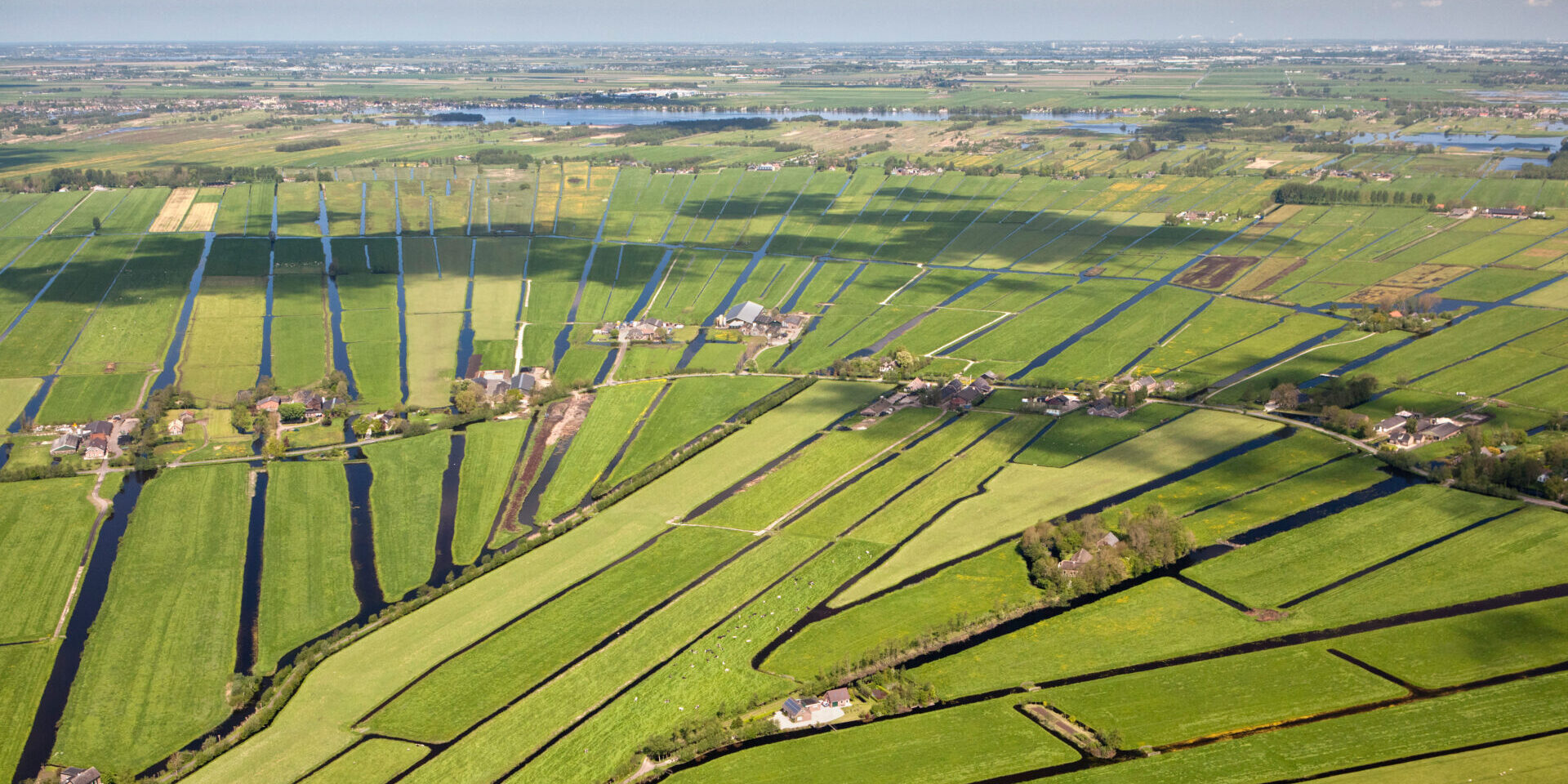
The Blue Battery as a concept is a smart buffer system for pumping stations that stores excess water regionally, preventing flooding and damage to ecology and infrastructure. By draining this water sustainably during off-peak hours, it eases pressure on the power grid and strengthens resilience to climate change.
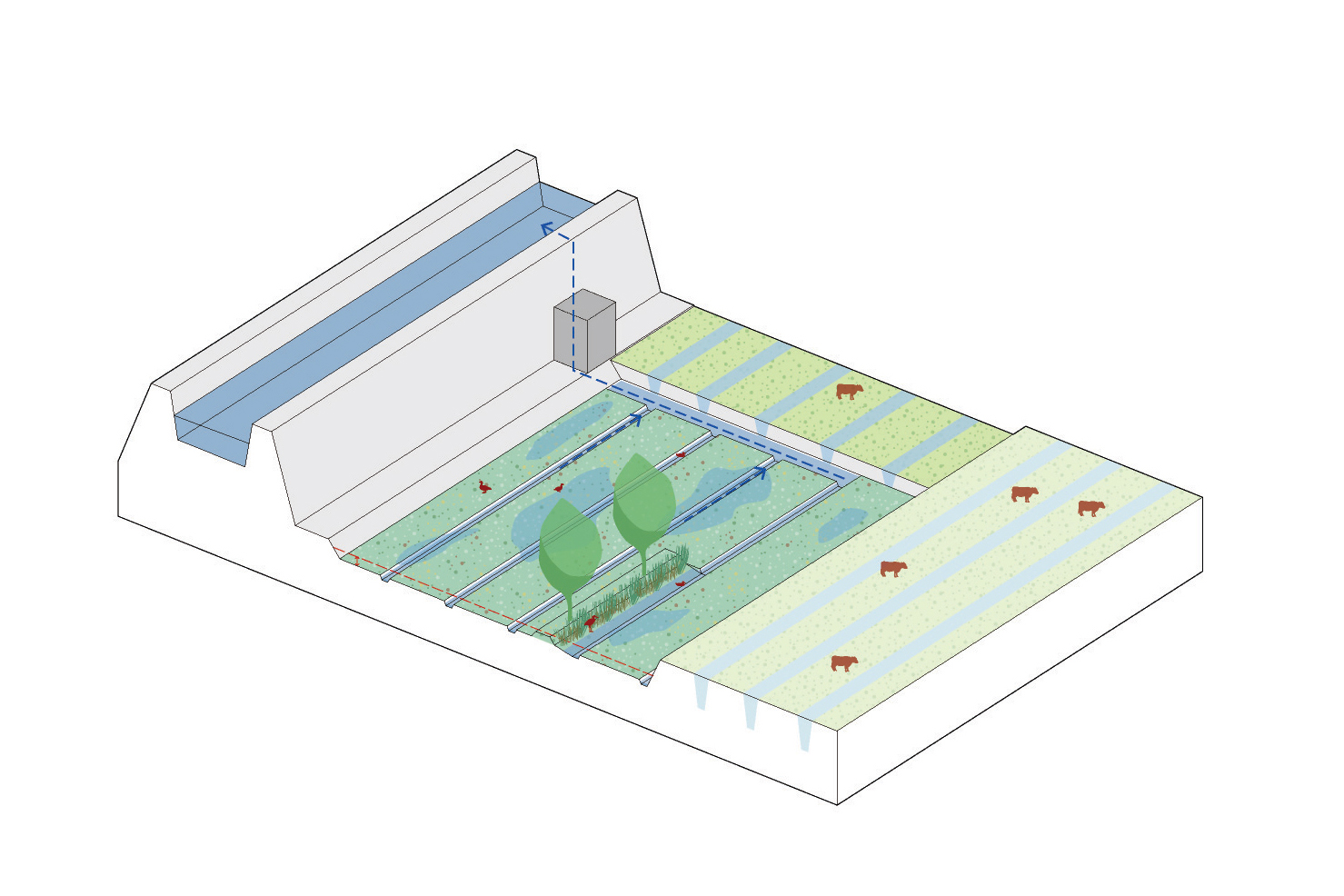
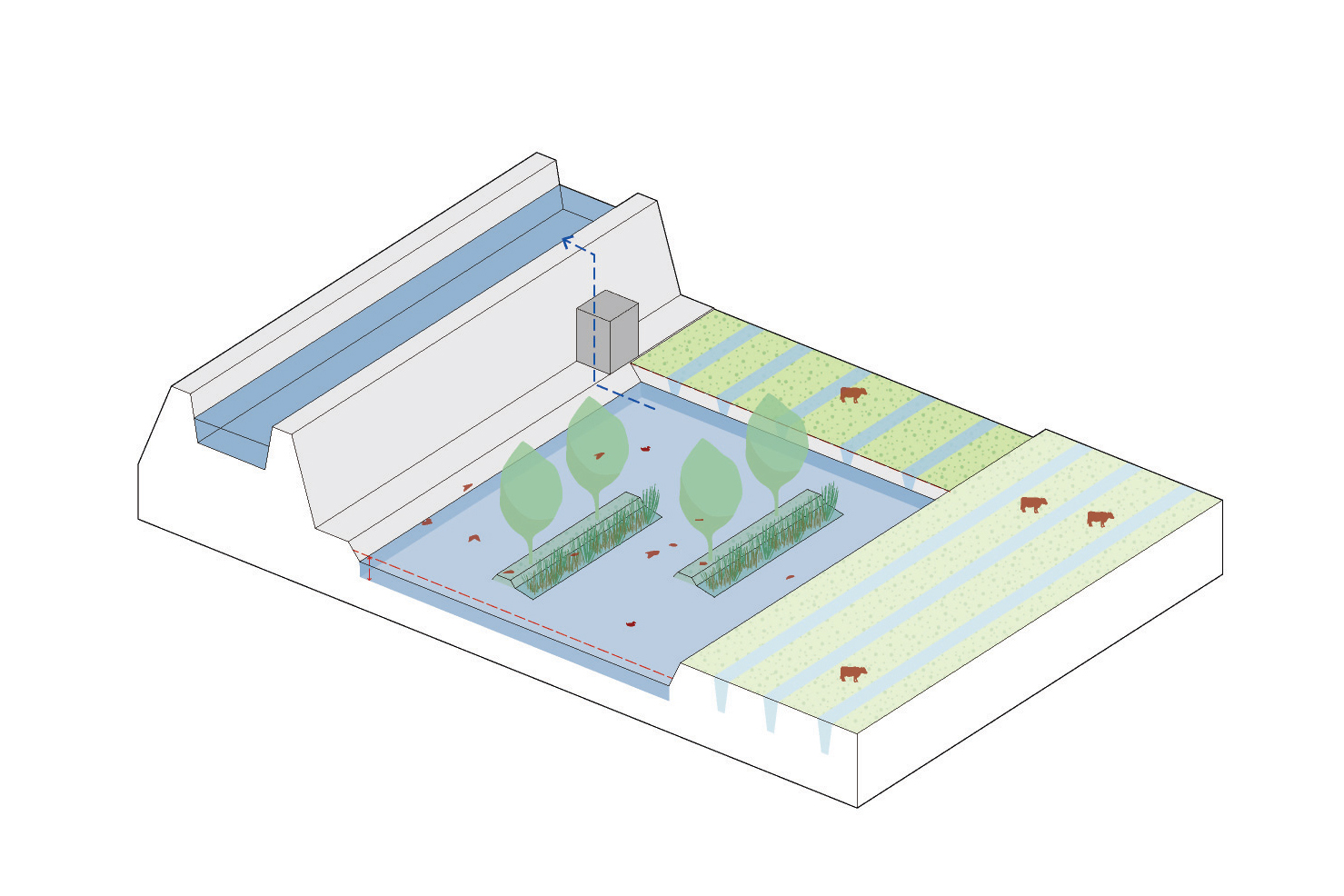
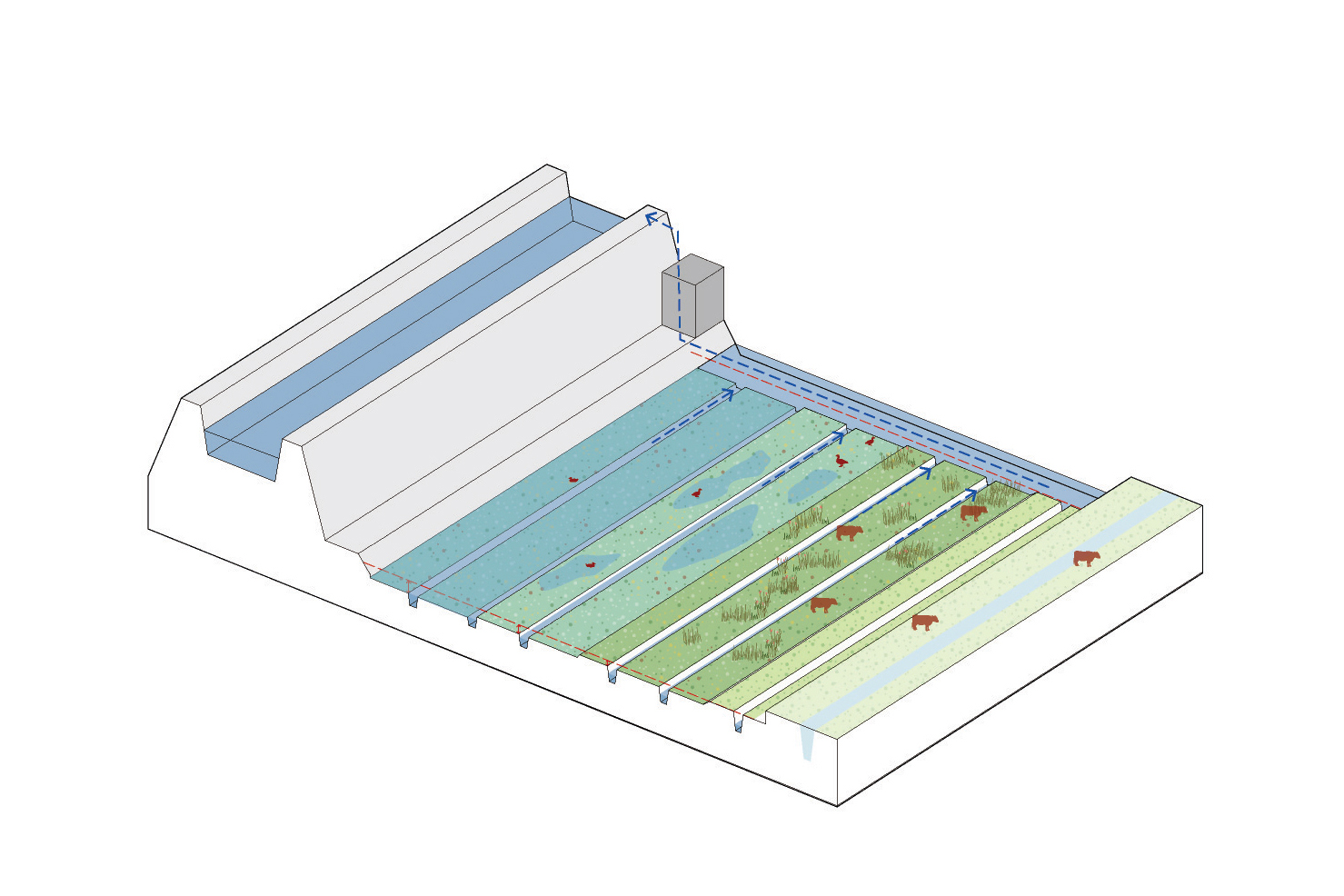
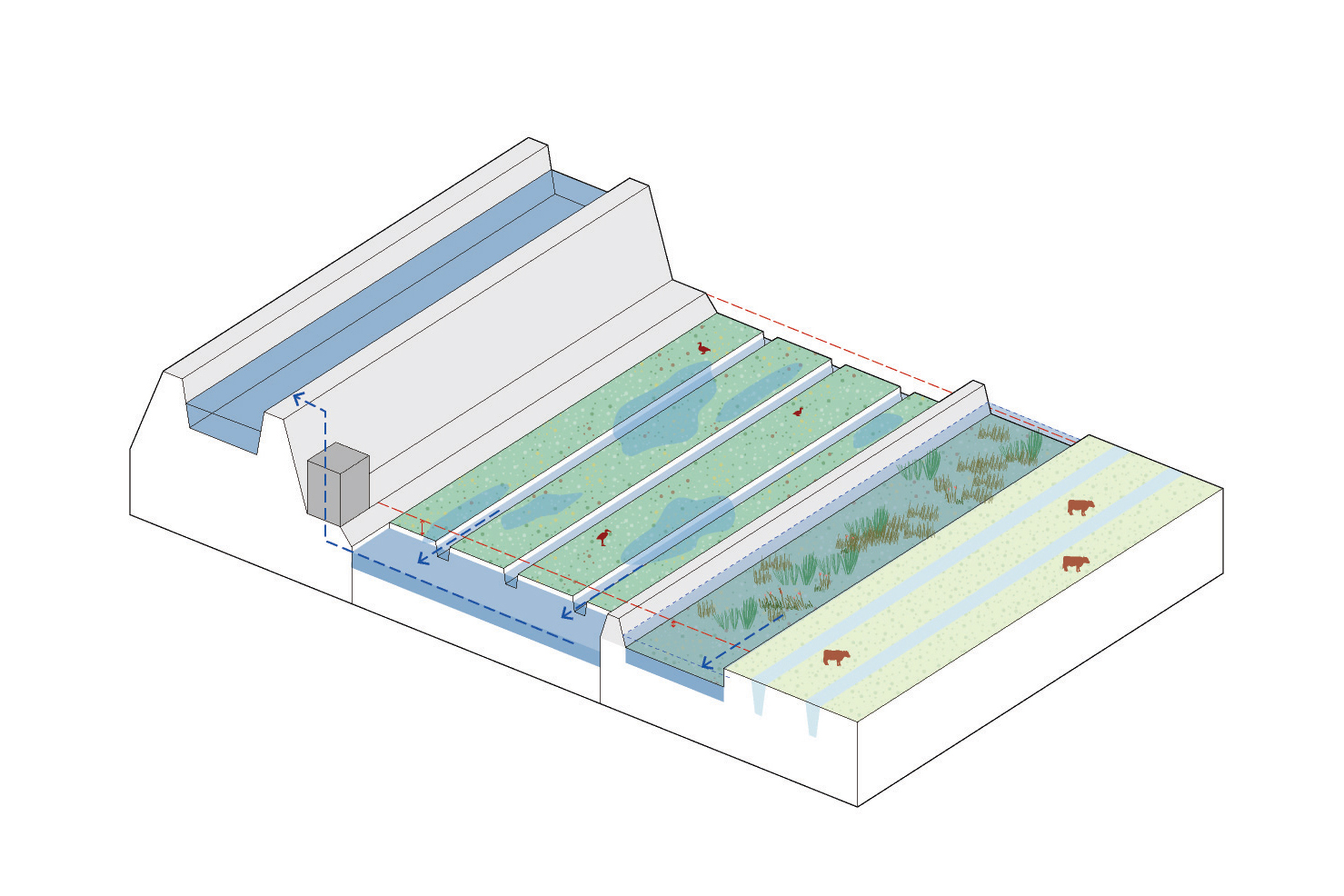
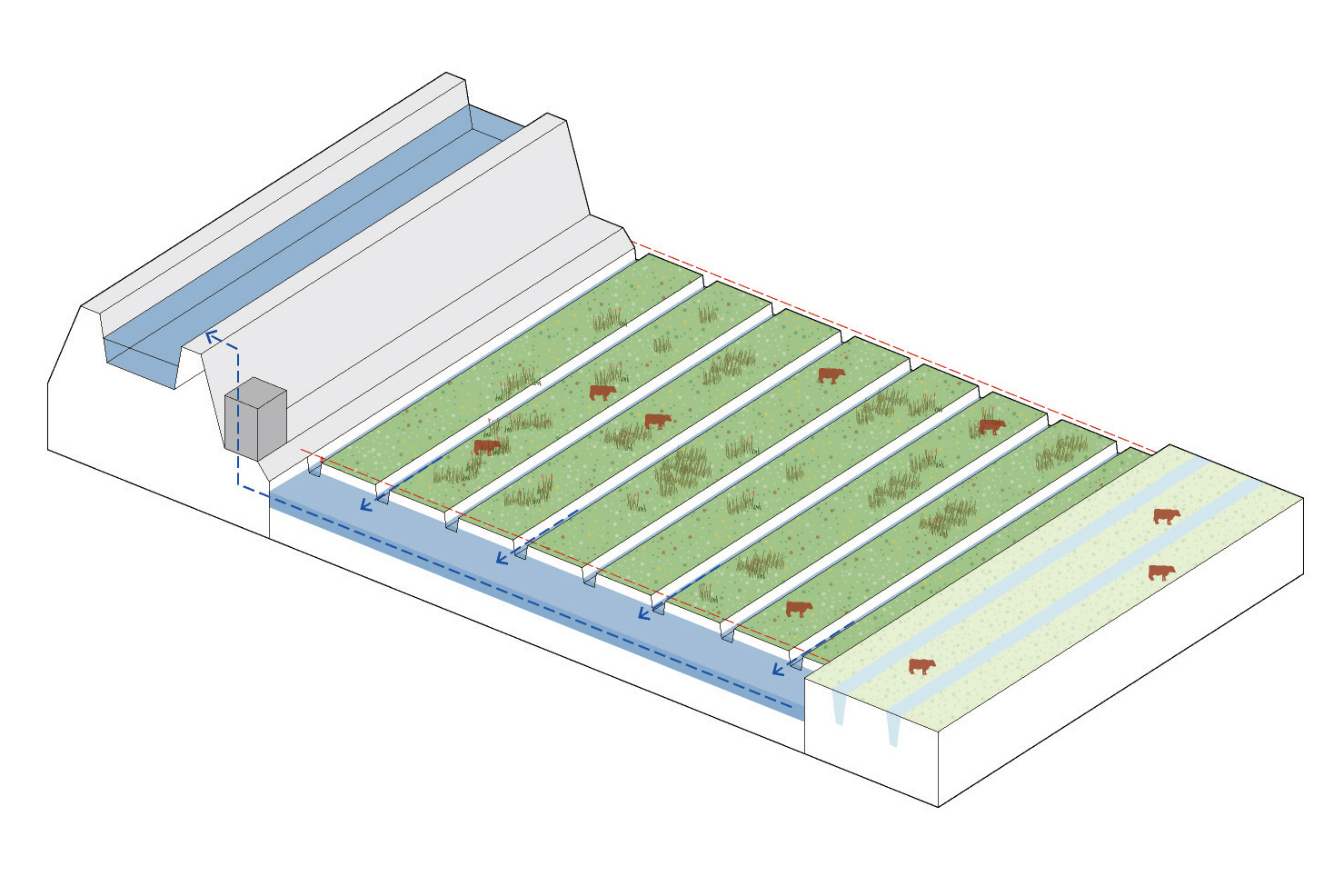

Each site poses distinct spatial and hydrological conditions — ranging from topographic variation to drainage depth and storage capacity — that shape tailored strategies for flood resilience, from compact, elongated buffer zones to more flexible, decentralised systems. These interventions revive the traditional Dutch ditch network as permanent water bodies, providing us with rare opportunities for peatland regeneration, a vanishing landscape type in the Netherlands. Consequently, we firmly uphold our unique foundation of environmental resilience by proactively collaborating with an ecologist to integrate the required flood barriers with nutrient-rich, biodiverse habitats. This layered ecosystem includes reed beds along shallow edges, rib-shaped nesting islands for birds, water soldier vegetation in ditches, and swamp forests on higher ground. Thus, through our innovative approach, a technical challenge becomes a catalyst for restoring wet nature.
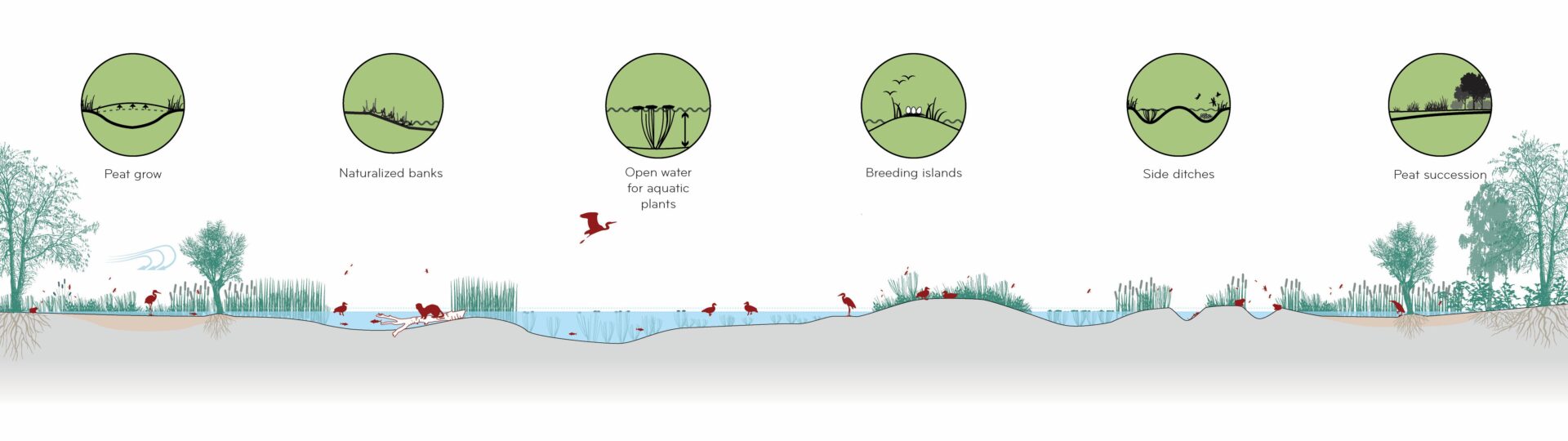
The Blue Battery ensures reliable long-term water storage to combat future flooding while offering a mosaic of habitats that enrich biodiversity and strengthen the resilience of the peat meadow landscape.
The next phase will involve a strategic exploration of a broader range of polder buffers for flood prevention in mid- and downstream areas, including potential relief for the Amsterdam-Rijnkanaal. This study could lead to an inspiring new generation of flood-protection buffers in combination with wetland development.