We’re proud to see our vision and strategy for the Integraal Kwaliteitskader Binnenstad Venlo (Integrated Quality Framework for Venlo City Centre), officially adopted by the Municipal Executive (Mayor and Aldermen), marking a major step forward for Venlo’s inner city transformation!

Through our vision for the IKBV, Venlo’s city centre is positioned at a pivotal moment of change. Recognising that the city centre was once primarily retail focused, our strategy guides its evolution into a vibrant mixed‑use urban environment, steering from “a place to buy” to “a place to be”.


We are delighted to share that our design has been selected for the new House of the Citizen in Middelkerke, Belgium! Conceived as part of the vision for the “City Center of Tomorrow,” the new town hall, designed together with Cordeel and BINST ARCHITECTS, will become a future‑oriented, sustainable, and instantly recognizable landmark on the renewed municipal square.


On 17 December, the environmental permit for Hub 3.0 at Brussels Airport was officially issued by Flemish Minister for the Environment and Agriculture, Jo Brouns. This marks an important step for Brussels Airport in the further development of the airport.


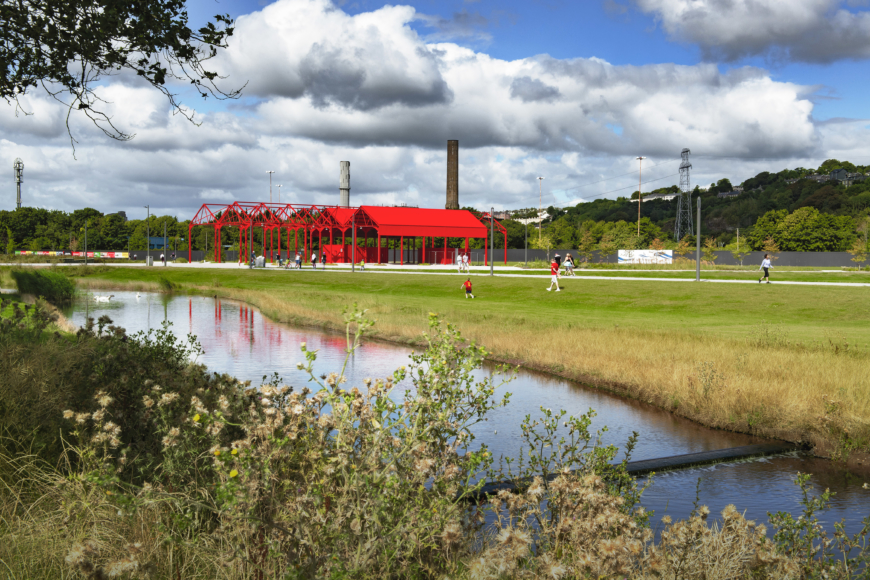
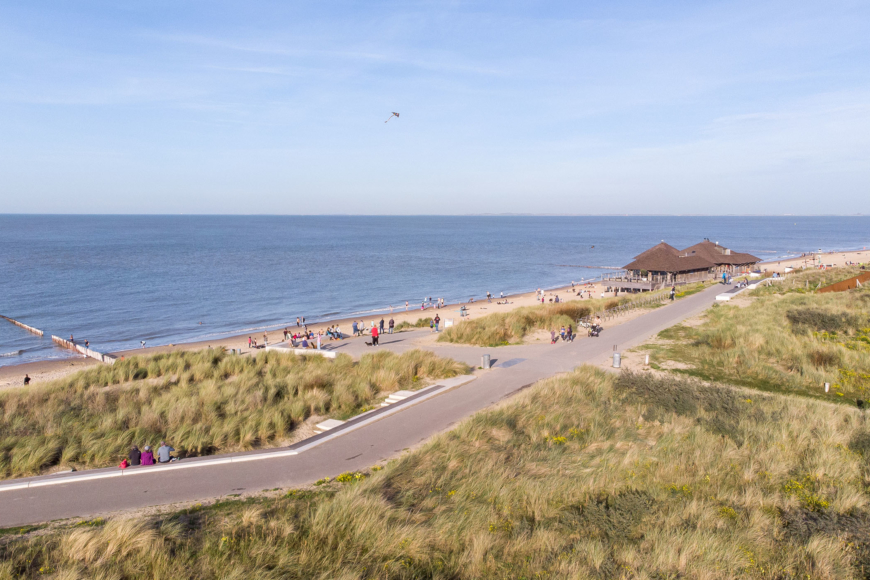
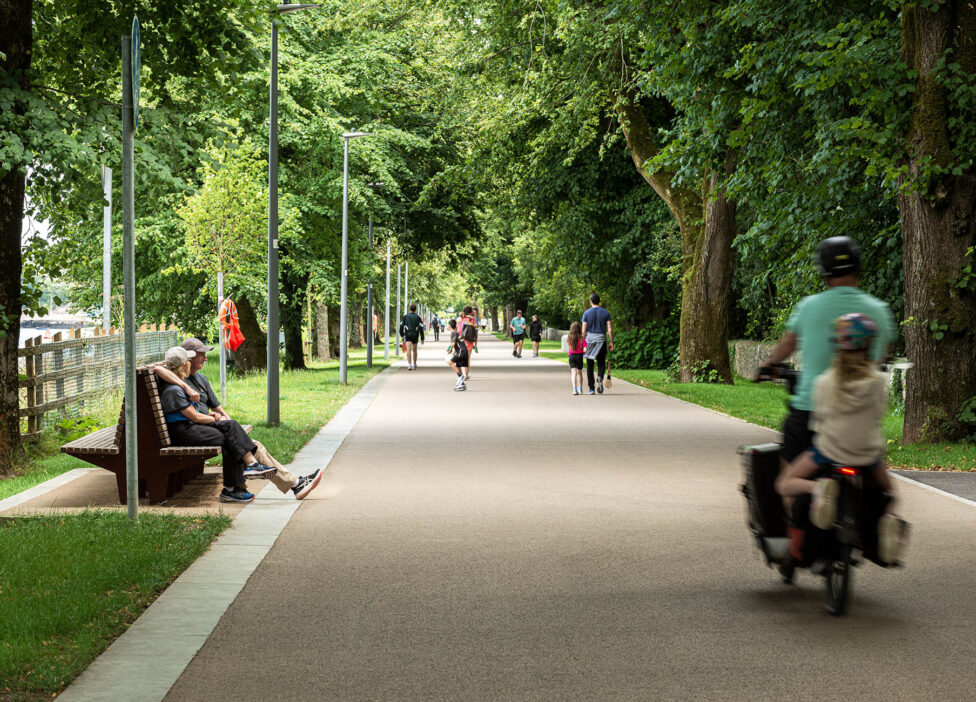
Marina Park in Cork, an ambitious project ongoing since 2012 is now finally completed and officially open to the public, serving as a vibrant catalyst for the transformation of Cork’s docklands. Marina Park fulfils the long-standing promise of creating a regional park to the east of the city. Positioned a short distance from the city centre, the completed project comprising an eco-park and a riverside promenade spans 70 acres, significantly expanding Cork’s green spaces. Last weekend marked the long-anticipated opening of the fully completed park to the public!


With climate challenges becoming more visible and extreme each year, a landscape-based approach is playing an increasingly central role in long-term spatial planning. In collaboration with the municipality of Zeewolde and KIEN ontwerp, we applied “water en bodem” principles (lit. “water and soil” – one of the key climate adaptation principles endorsed by the Dutch government) as guiding factors to lay the foundation for a design-led study of the Ossenkampweg agricultural area in Zeewolde.


We are thrilled to be at the forefront of a transformative vision for the new North-West City Park, alongside the Cork City Council – Comhairle Cathrach Chorcaí and a key network of collaborators, stakeholders, and community groups. This landmark project will deliver an impressive 116 hectares of public open space on the edge of the city, designed to support recreation, while harmonizing with the pastoral and the wild. The park’s unique landscape identity will boast social, cultural, economic, and environmental benefits, a bold long-term investment in enhancing the quality of life of Cork’s communities for generations to come.


Bunnik is on the brink of a bold transformation! In close collaboration with SVP Architecture and Urban Planning, and CROSS Architecture, and commissioned by the municipality, we have designed a masterplan for the new station area. With the municipal council’s approval, Bunnik is set to transform a once outdated office area into a green, inclusive and future-proof live-work district over the coming years. The masterplan was shaped in close collaboration with residents, entrepreneurs and municipal partners including Royal BAM Group, LEKSTEDEwonen and Portaal.

The design prioritises flexible design guidelines, focuses on pedestrians and cyclists, introduces a vibrant central park, and connects the village to its surroundings through a Green Ribbon that promotes biodiversity, sustainability, health, and community. Bunnik is positioning itself as a prominent cycling hub, a regional gateway and a key station for Utrecht Science Park, setting a new benchmark for future urban living.


We are shaping the future of Dordrecht with the launch of a vibrant new green neighbourhood! Nestled within the ‘Dordts Geluk’ housing development on Spuiboulevard, this urban biotope introduces greenery and ecological diversity while shaping a low-traffic, welcoming neighbourhood just steps from the lively city centre. Designed in collaboration with Waaijer Projectrealisatie, Trebbe, FARO, Juli Ontwerp, BureauVanEig, and Movares, this development of 142 apartments sets the stage for a healthy, sustainable way of living in a natural context.


We are proud to announce the completion of our preliminary design for Ragheno park in Mechelen, Belgium, a transformative landmark that establishes a green spine through the station district and anchors its role within a larger mixed-use development in the making. Spanning 11 hectares, Ragheno park reclaims a former industrial site as the largest city park in Mechelen, surpassing the combined size of all parks within the historical Vesten! The preliminary design is prepared in close collaboration with Atelier Ruimtelijk Advies and PLOT Ruimtelijk Management, and commissioned by the City of Mechelen and Pidpa. While the wider site is guided by a master plan, focusing on the park’s design at this stage of the development ensures a clear and unified vision within the broader framework.


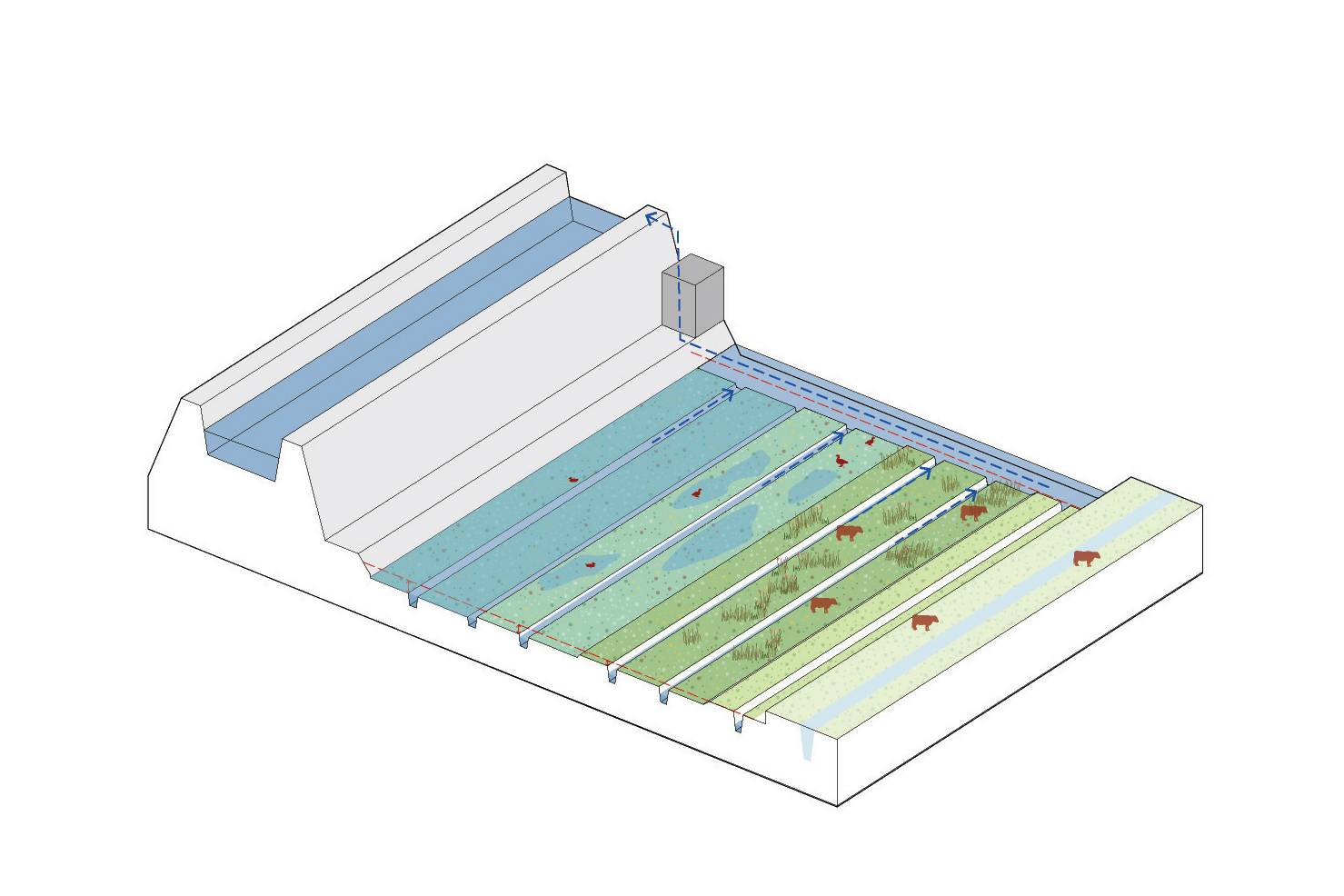
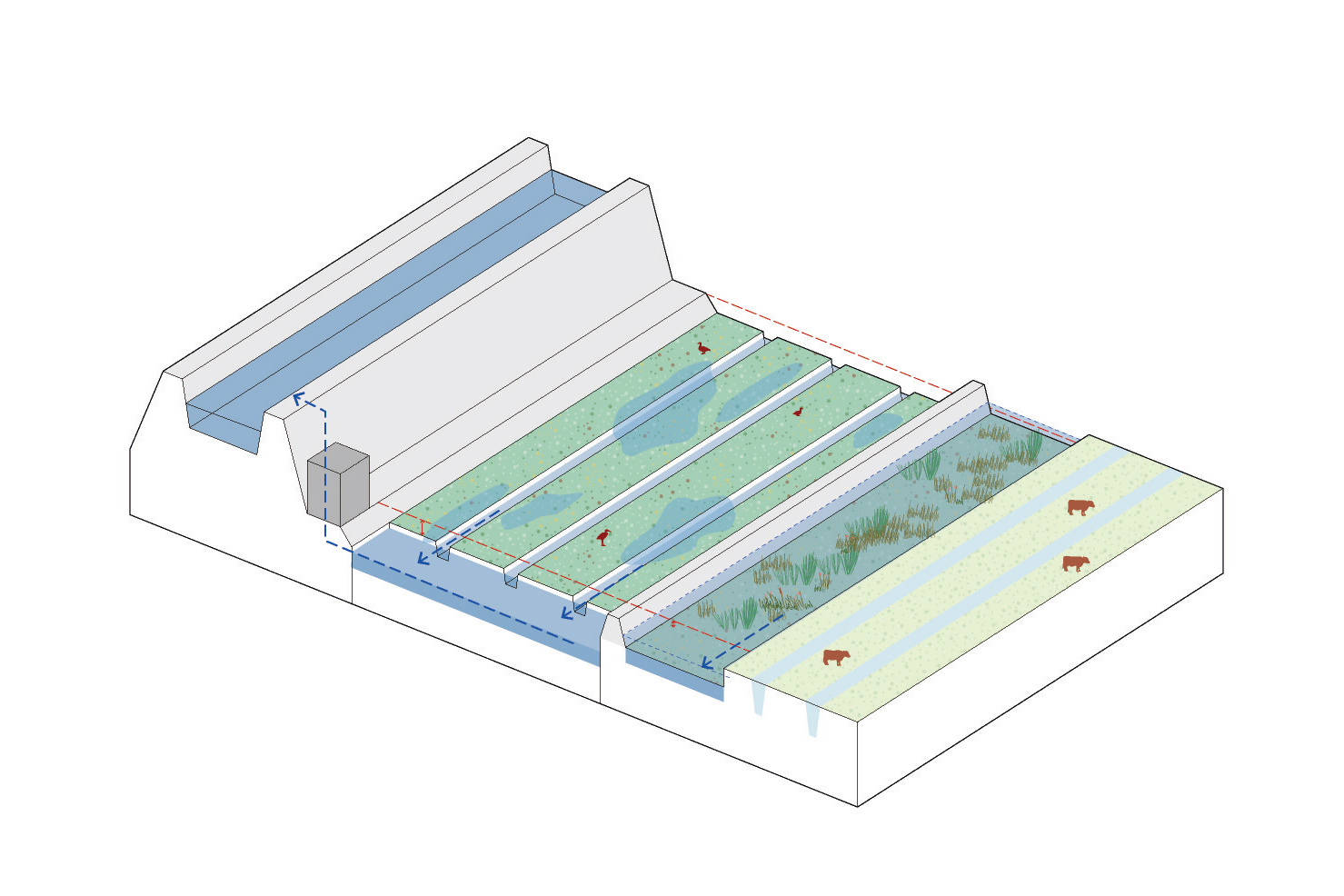
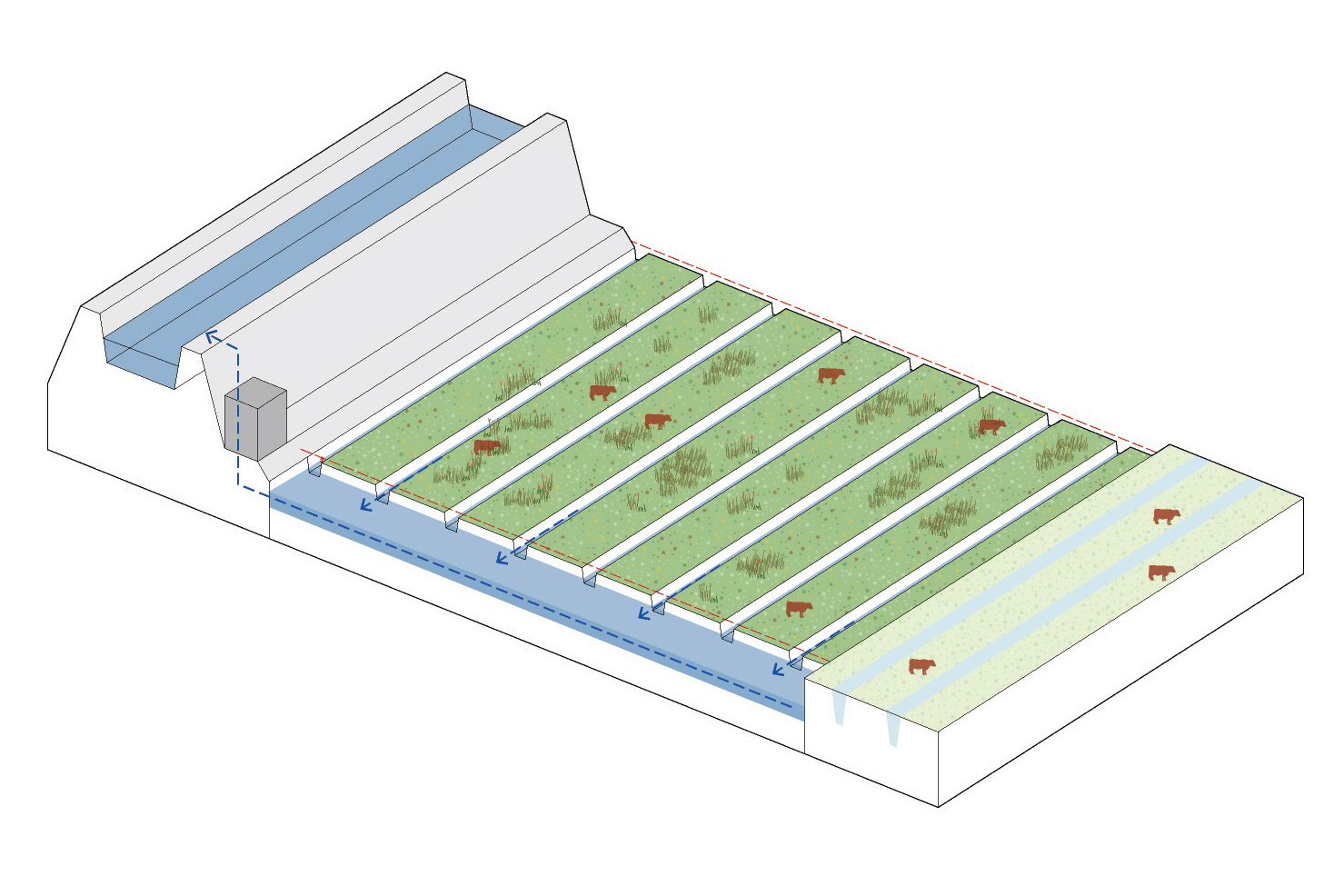
With rapid climate change driving sea-level rise and intensifying flood risks, the low-lying polders of the western Netherlands face vulnerability. Along the Amsterdam-Rhine Canal, pumping stations face growing pressure to manage drainage, heightening the risk of waterlogging. To confront this challenge, De Stichtse Rijnlanden Water Board commissioned us, in collaboration with Nelen Schuurmans and Ambient, to initiate a study on the integration of three potential climate-resilient water buffers in peat meadow polders, referred to as the ‘Blue Battery’.


The Blue Battery

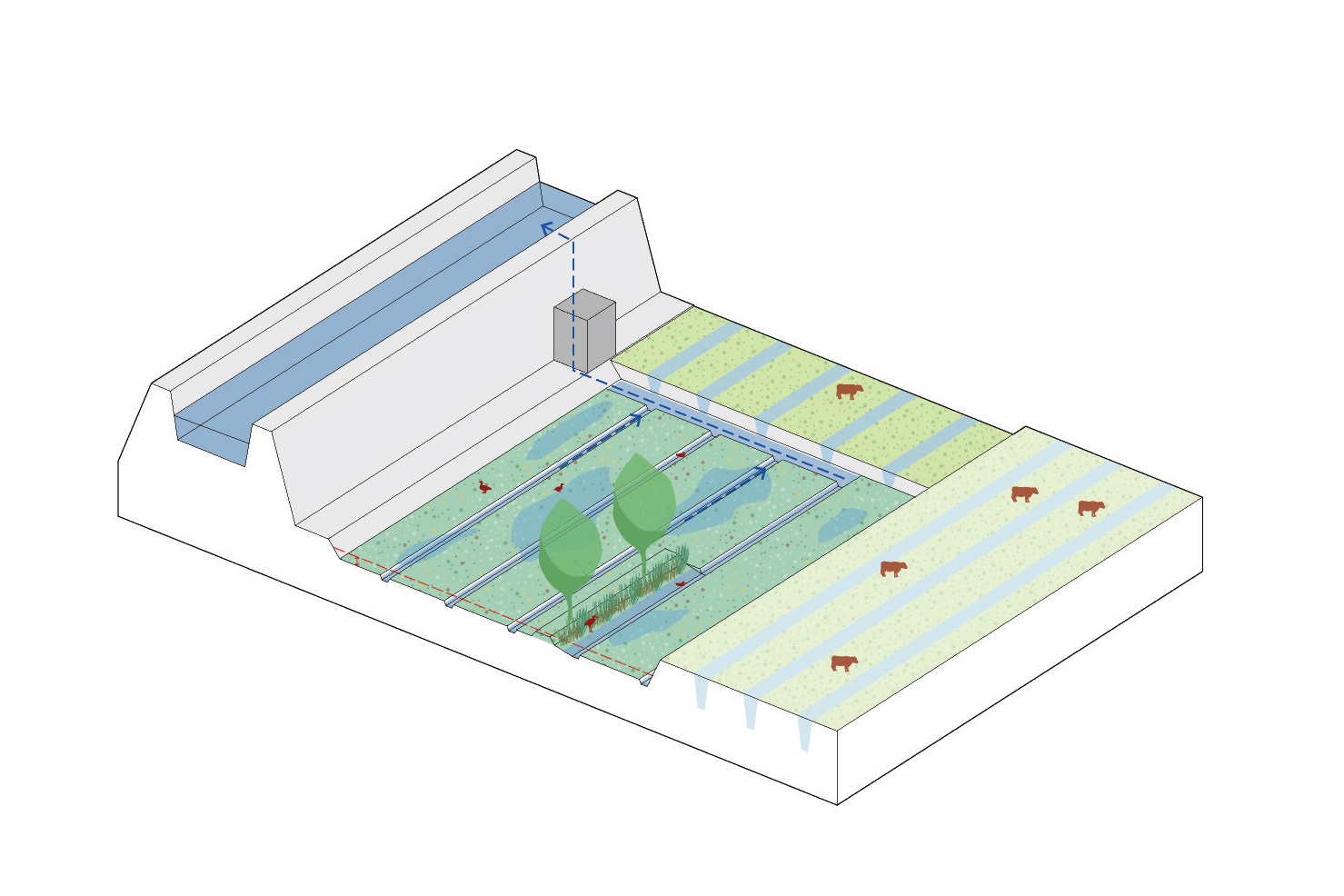
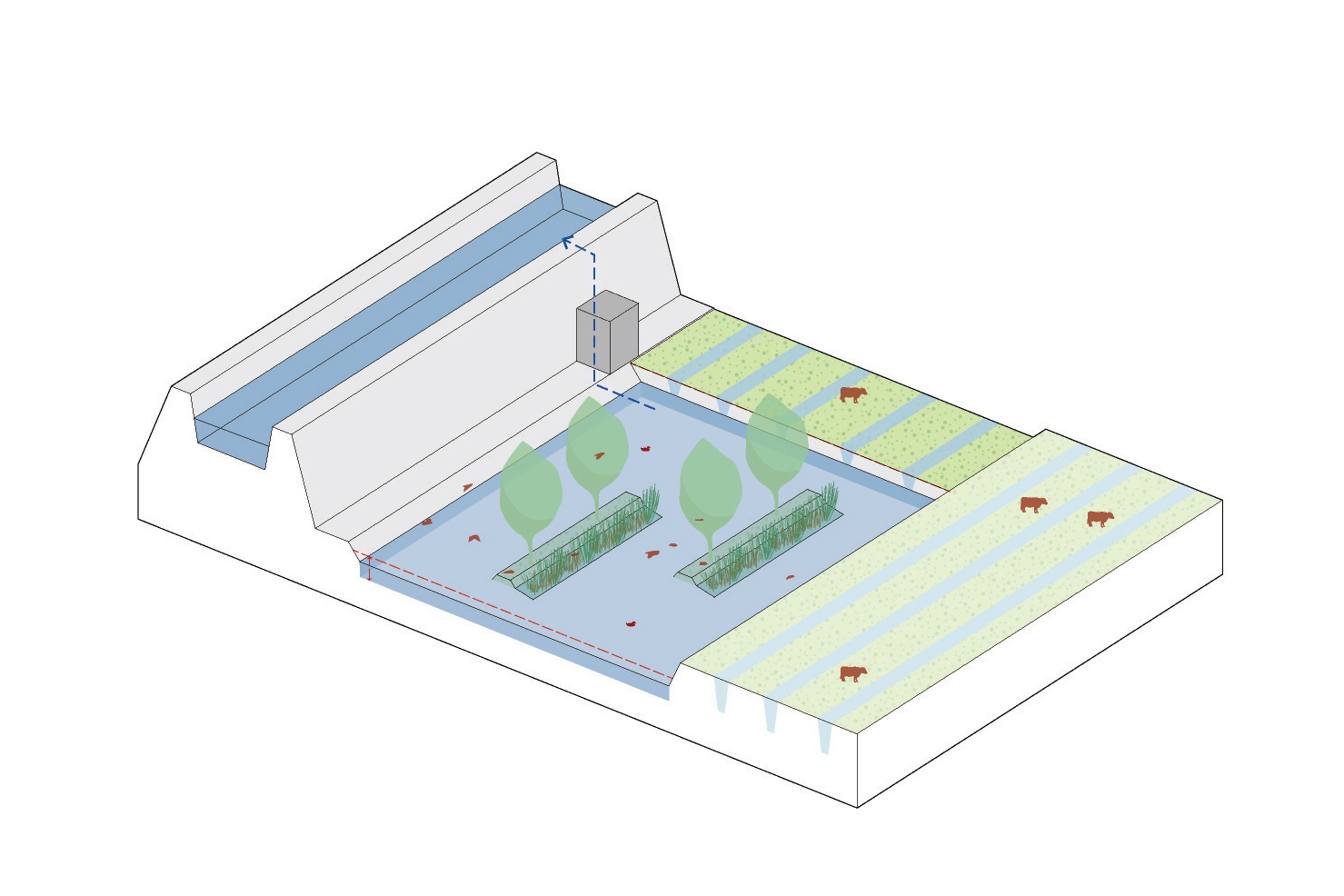
The Blue Battery as a concept is a smart buffer system for pumping stations that stores excess water regionally, preventing flooding and damage to ecology and infrastructure. By draining this water sustainably during off-peak hours, it eases pressure on the power grid and strengthens resilience to climate change.
‘What makes this project truly special is the ongoing collaboration with Nelen Schuurmans’ deep technical expertise, and Jos Rademakers’ ecological concept, which combined with our landscape design perspective, allows us to push the boundaries of what flood protection can be.’

– Janneke van Bergen, Senior Project Leader
 
Creator of meaningful places
Site visit to an existing buffer zone

From flood risk to ecological opportunity

Each site poses distinct spatial and hydrological conditions — ranging from topographic variation to drainage depth and storage capacity — that shape tailored strategies for flood resilience, from compact, elongated buffer zones to more flexible, decentralised systems. These interventions revive the traditional Dutch ditch network as permanent water bodies, providing us with rare opportunities for peatland regeneration, a vanishing landscape type in the Netherlands. Consequently, we firmly uphold our unique foundation of environmental resilience by proactively collaborating with an ecologist to integrate the required flood barriers with nutrient-rich, biodiverse habitats. This layered ecosystem includes reed beds along shallow edges, rib-shaped nesting islands for birds, water soldier vegetation in ditches, and swamp forests on higher ground. Thus, through our innovative approach, a technical challenge becomes a catalyst for restoring wet nature.
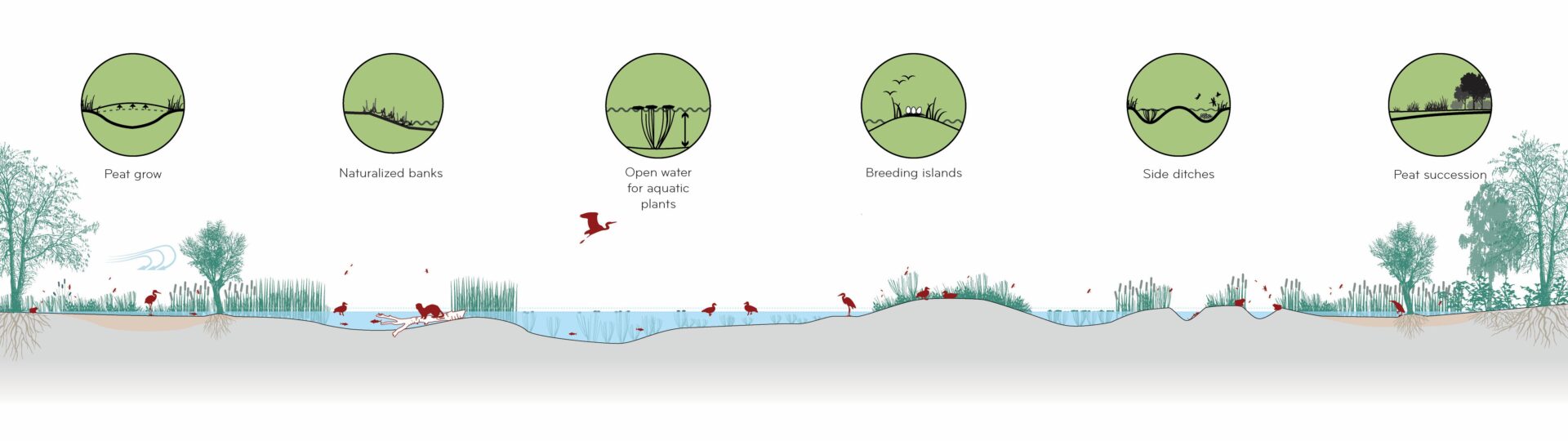
A rich variety of sub-biotopes develops within the buffer zone, tailored to nutrient-rich, fluctuating water levels, and as an asset to the peat meadow area
 

Toward a climate-resilient future

The Blue Battery ensures reliable long-term water storage to combat future flooding while offering a mosaic of habitats that enrich biodiversity and strengthen the resilience of the peat meadow landscape.

The next phase will involve a strategic exploration of a broader range of polder buffers for flood prevention in mid- and downstream areas, including potential relief for the Amsterdam-Rijnkanaal. This study could lead to an inspiring new generation of flood-protection buffers in combination with wetland development.


Discover our projects