February 12, 2026 News


An active mobility district
Superblock principles for a walkable heart
A place for interaction
A green thread weaving through the station

Providing seamless and obvious pedestrian and cycling connections from and towards the transport hub

Organising traffic around the blocks to calm the core while favouring walking and cycling

A lively everyday space for waiting/ meeting at the interfaces between the station, bus stops and active frontages

Enhancing comfort and resilience by carrying the wetland park’s green-blue systems through to the station
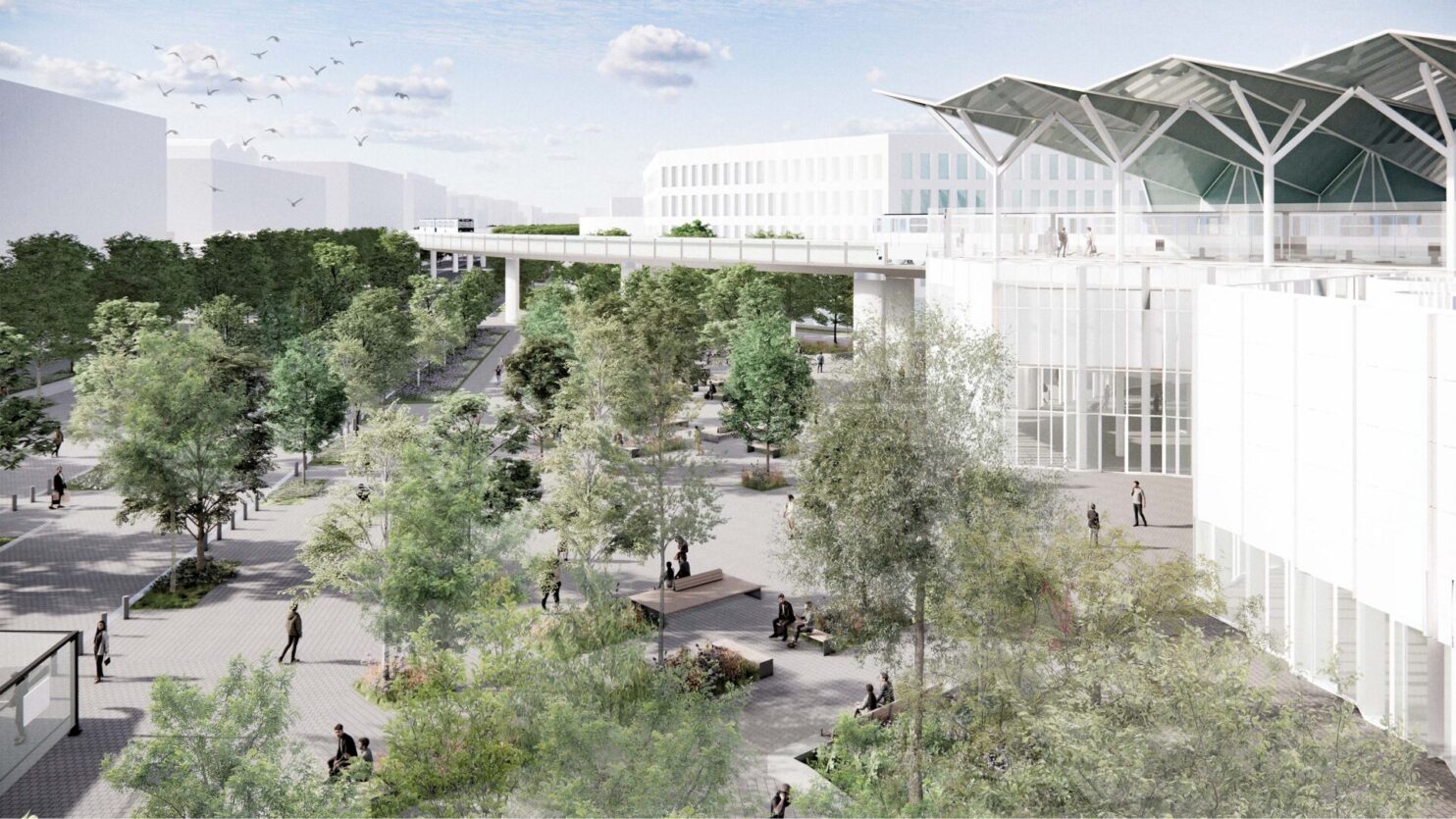
By 2026, a new multimodal hub will welcome the arrival of Metro Line 18 of the Grand Paris Express alongside an expanded bus station, strengthening regional connections and supporting everyday mobility. Major developments, from a life sciences cluster to new public and sports facilities, will reshape this part of Paris-Saclay in the coming years. This calls for a public space framework that can accommodate growing flows, provide intuitive connections and support a wide range of urban functions.


Our design introduces a clear spatial logic: a continuous pedestrian route linking the campus to the wetland park in the north, supported by a strong cycling network and a street hierarchy inspired by the “superblock”. Together, these elements turn the station area into a comfortable place to meet, rest, and move, a true gateway to the campus city.
The station area is designed as a place to stay as much as a place to move through. Its layout follows clear desire lines and a sequence of identifiable meeting points, accommodating everyday uses and informal gatherings at key interfaces with station entrances, bus stops, and future active ground floors. Carefully curated seating reinforces the station’s role as a major place of exchange, supporting a wide range of uses and configurations while ensuring comfort for all ages and abilities. Strategic seating along planted edges keeps pedestrian routes clear while offering sun and shade, activating the public realm and supporting the district’s evolving vocation as a place to live, study, and work.

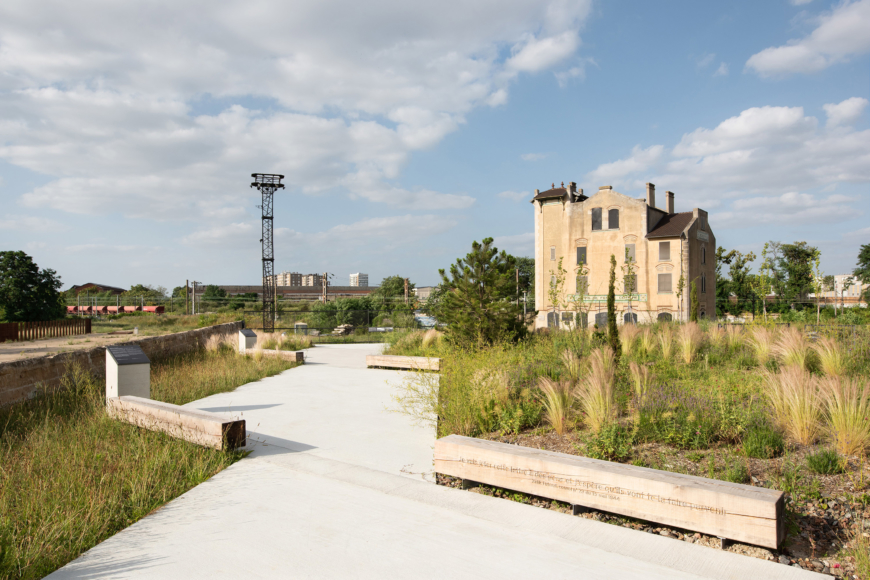
Building on the strong landscape identity of the plateau, the project extends the green-blue infrastructure of the wetland park and forests into the urban heart of the district. This continuous landscape framework weaves together the atmospheres and ecological functions of the surrounding biotopes, bringing nature into everyday urban life. Dense tree planting provides shaded, thermally comfortable public spaces, while generous full-soil areas support healthy tree growth and long-term resilience. Multilayered vegetation maximises ecological value and strengthens the district’s green network while encouraging everyday interaction between people and landscape. A palette of exclusively native species reinforces continuity with the surrounding plateau and ensures a robust yet low-maintenance landscape.


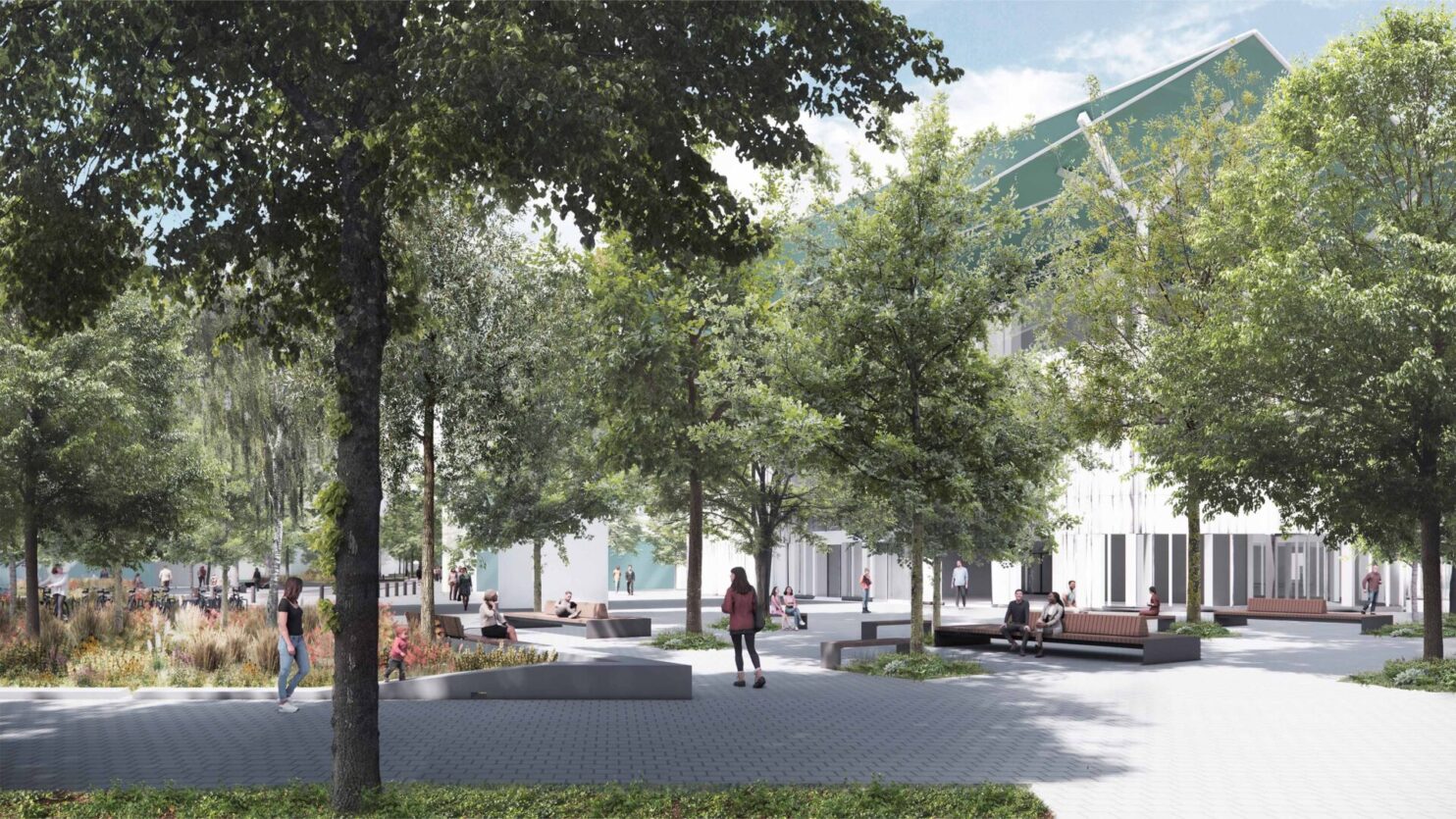
Sustainable urban drainage forms the backbone of the nature-based strategy. The station forecourt is structured by a sequence of rain gardens, with ground levels gently guiding rainfall into these planted basins, where water is slowed, absorbed and filtered naturally, extending the wetland character of the park into the public realm. Rainfall events of up to 10 mm are managed entirely on site without relying on conventional drainage network, contributing to local groundwater recharge. Complementary measures including permeable paving and the redirection of surface runoff towards planted areas further reduce runoff, retain moisture, and support healthy tree growth through evapotranspiration. During heavier rainfall, discreet overflow systems connect safely to the wider stormwater retention ponds, ensuring resilience without interrupting daily use.