January 15, 2026 News
Through a European tender procedure, which attracted over 40 top international teams, the Belgian–Dutch team of Witteveen+Bos, Benthem Crouwel Architects, OKRA, and Stramien CV was selected to deliver a future-oriented design for this ambitious project. In close collaboration with the client, they are responsible for the architectural design, engineering, and landscape design.
In the development of the project, the team is supported by several subcontractors. PlaneGround contributed to the logical functional layout of the buildings and analysis of passenger flows. M gineers is involved in the design and implementation of the thermal energy storage fields, the HVAC, electrical, sprinkler, and security systems. Zonneveld assists with the design and development of part of the main structural framework. And 4Building supports the team in determining construction costs.
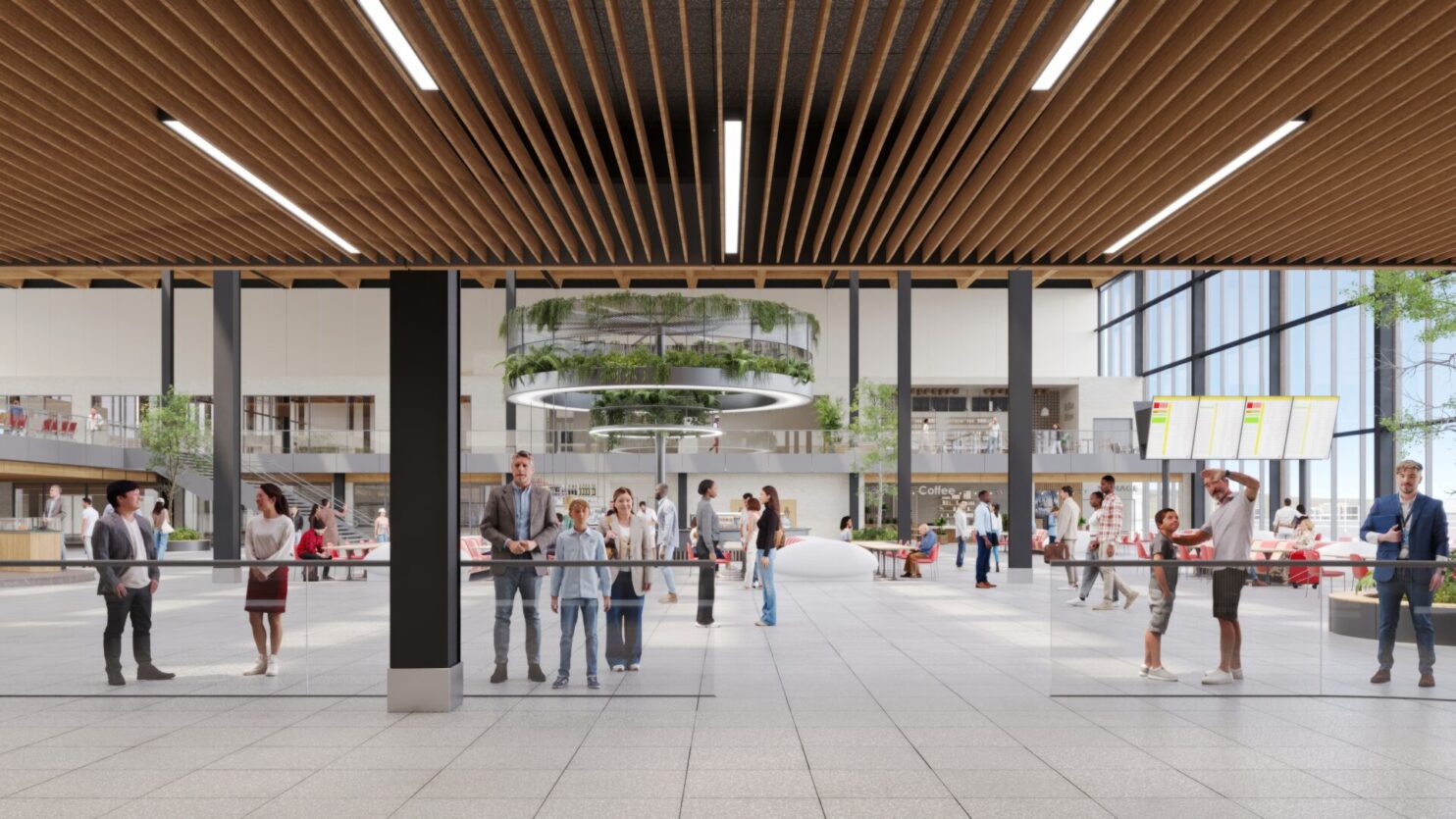
Passenger experience is at the heart of the design. For both flows of passengers (arriving and departing), the terminal expansion will present itself as a lively, attractive space with a multitude of functions through which one can move efficiently and intuitively.
Today, between 65,000 and 85,000 passengers pass through the terminal each day, and it is reaching its maximum capacity. The project will create more space to accommodate the expected passenger growth. It focuses on efficiency, comfort, experience, hospitality, and safety — for passengers, visitors, and employees alike.
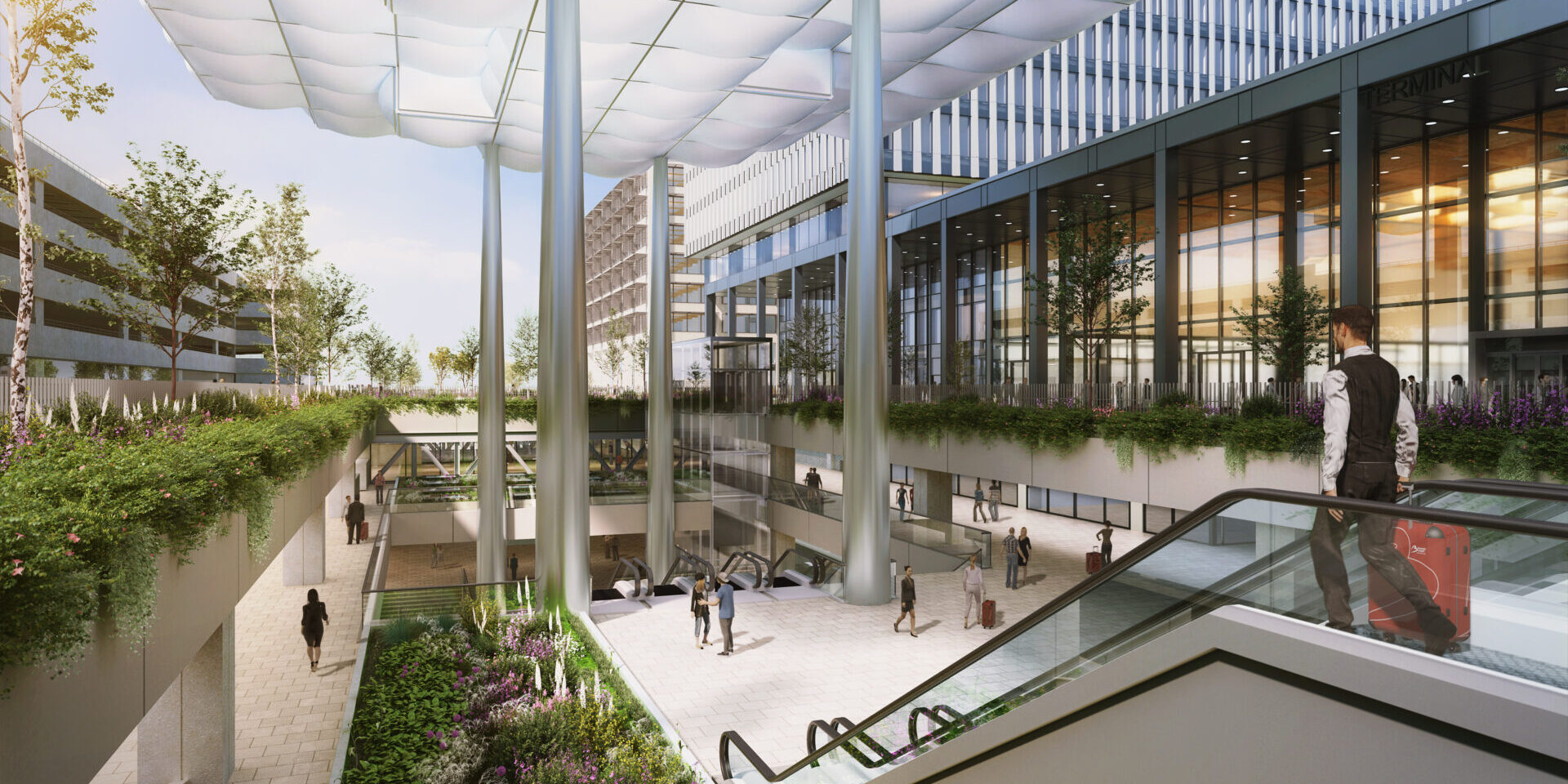
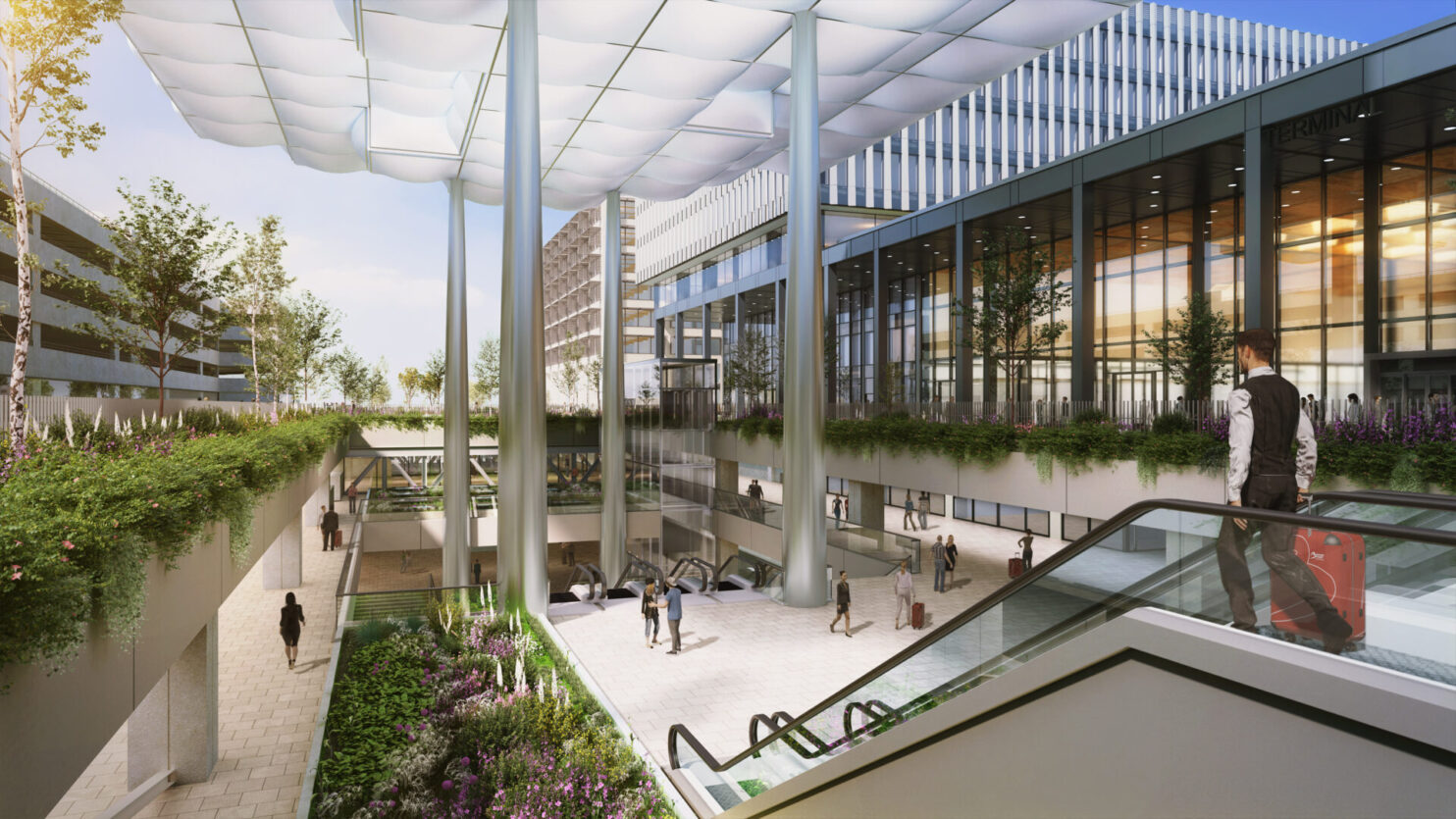
Today, Brussels Airport consists of many scattered functions on different levels. The new design integrates the flows of arriving and departing passengers into one building — an intermodal hub with a central vertical access core. This key feature becomes a recognizable element within an inviting, open-air public space from which all surrounding buildings are accessible.
From this public space, the layers of the hub are clearly visible through large openings, allowing daylight to penetrate all levels — even the deepest underground train station, thanks to a massive atrium.
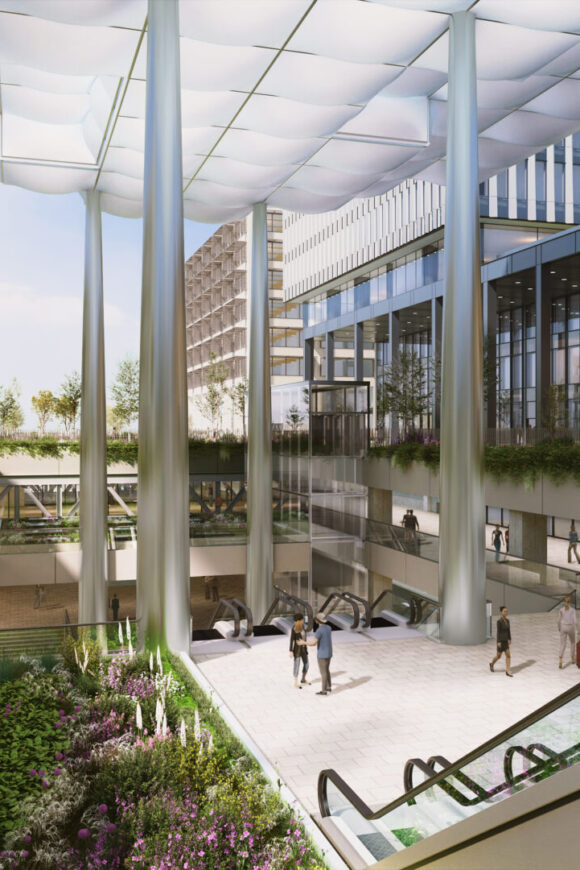
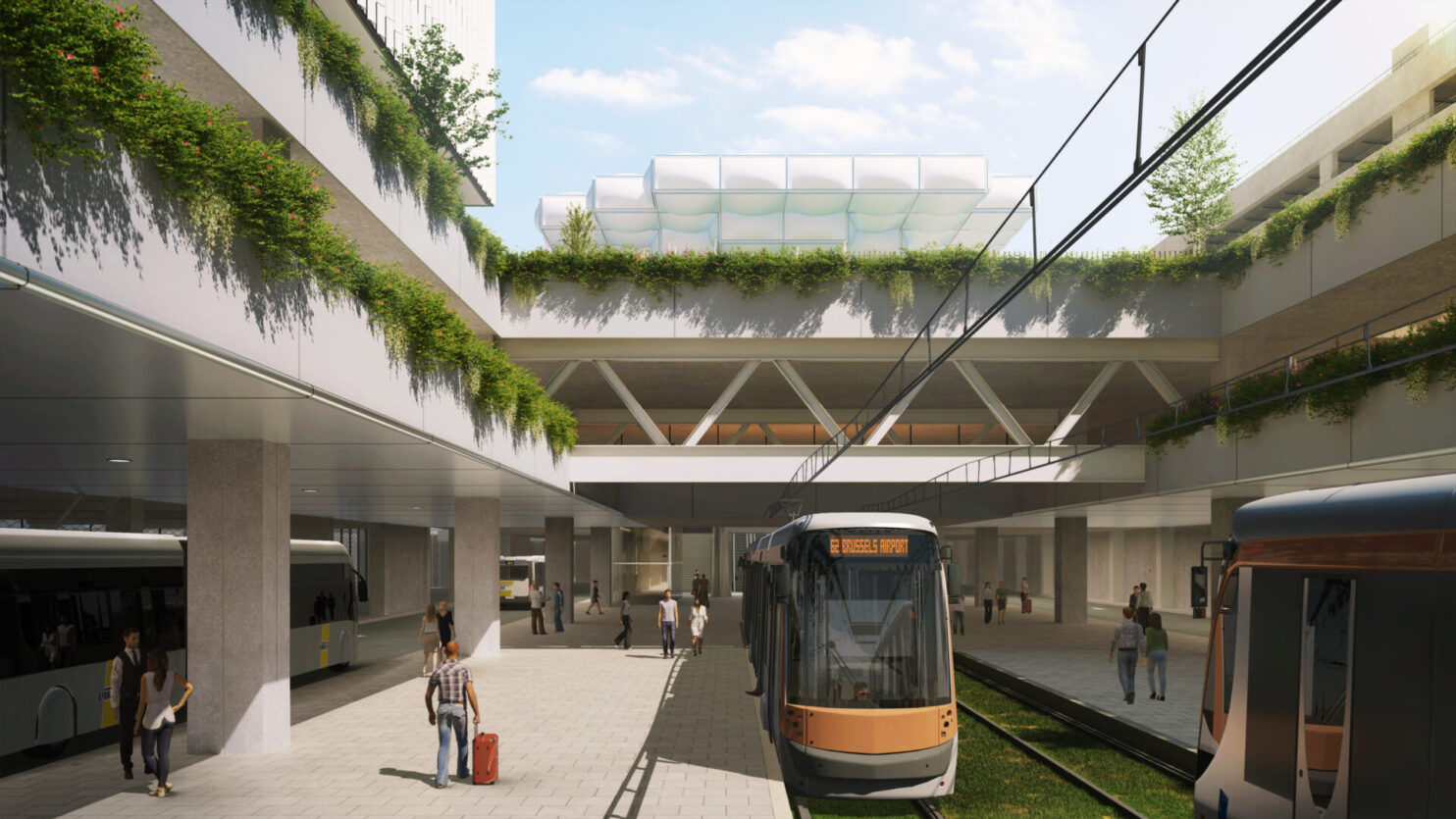
At the heart of the plan is the intermodal hub – a vibrant core where all modes of transport are vertically integrated. The central vertical circulation point forms a new connection to the train station, a renewed central bus station, a spacious bicycle parking facility, and an upgraded taxi zone. The future airport tram will also have its terminus here. With this, Brussels Airport aims to further promote a modal shift by facilitating and encouraging sustainable transport to and from the airport.
The intermodal hub not only creates more space for the anticipated growth in passenger numbers but also ensures a more efficient flow. It serves as a gateway that guides travelers to all buildings in a clear and intuitive way. And it does so safely – without the need to cross any streets.
The terminal will be expanded and adapted to improve both (future) capacity and the passenger experience.
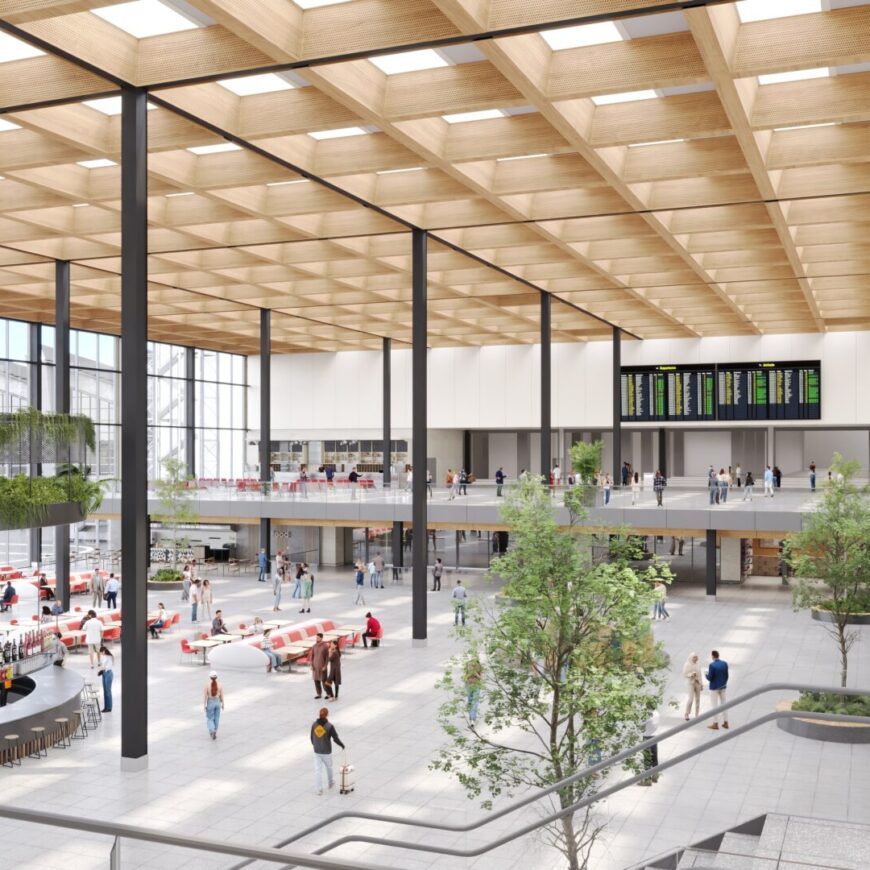
Departing travelers will be welcomed into a spacious and impressive departure hall with a fully glazed façade offering spectacular views of the tarmac. Daylight will also enter through the roof, which features a large solar panel array and green roofing — clearly visible from the air.
‘It’s important that arriving passengers also share in this experience. After passport control, they enter a bright, open and clear space. A large atrium physically and visually connects the arrivals and departure halls.’
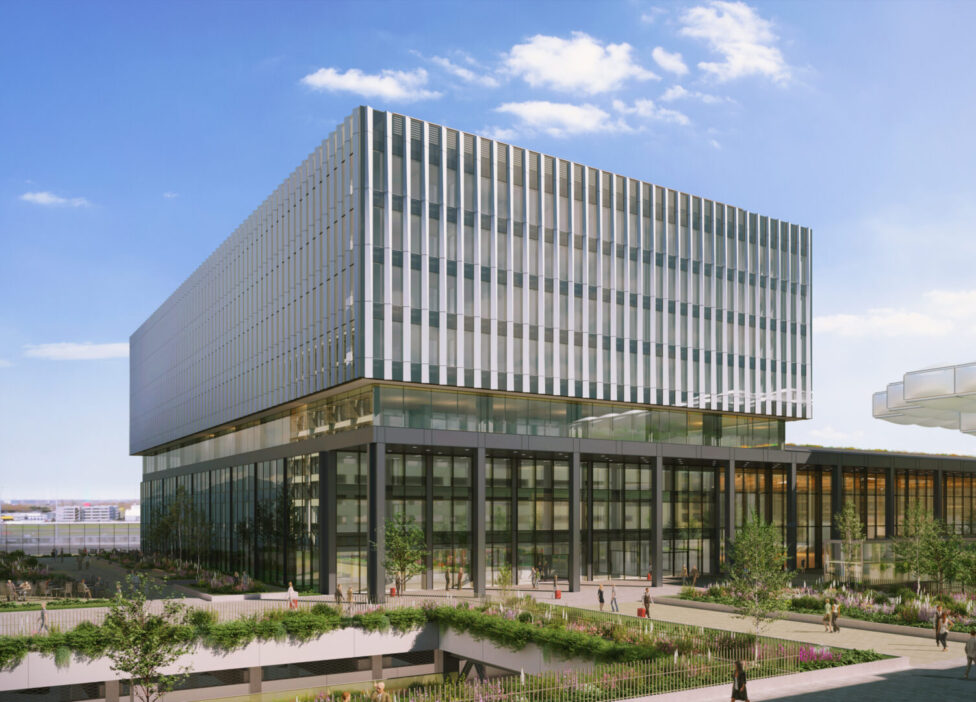
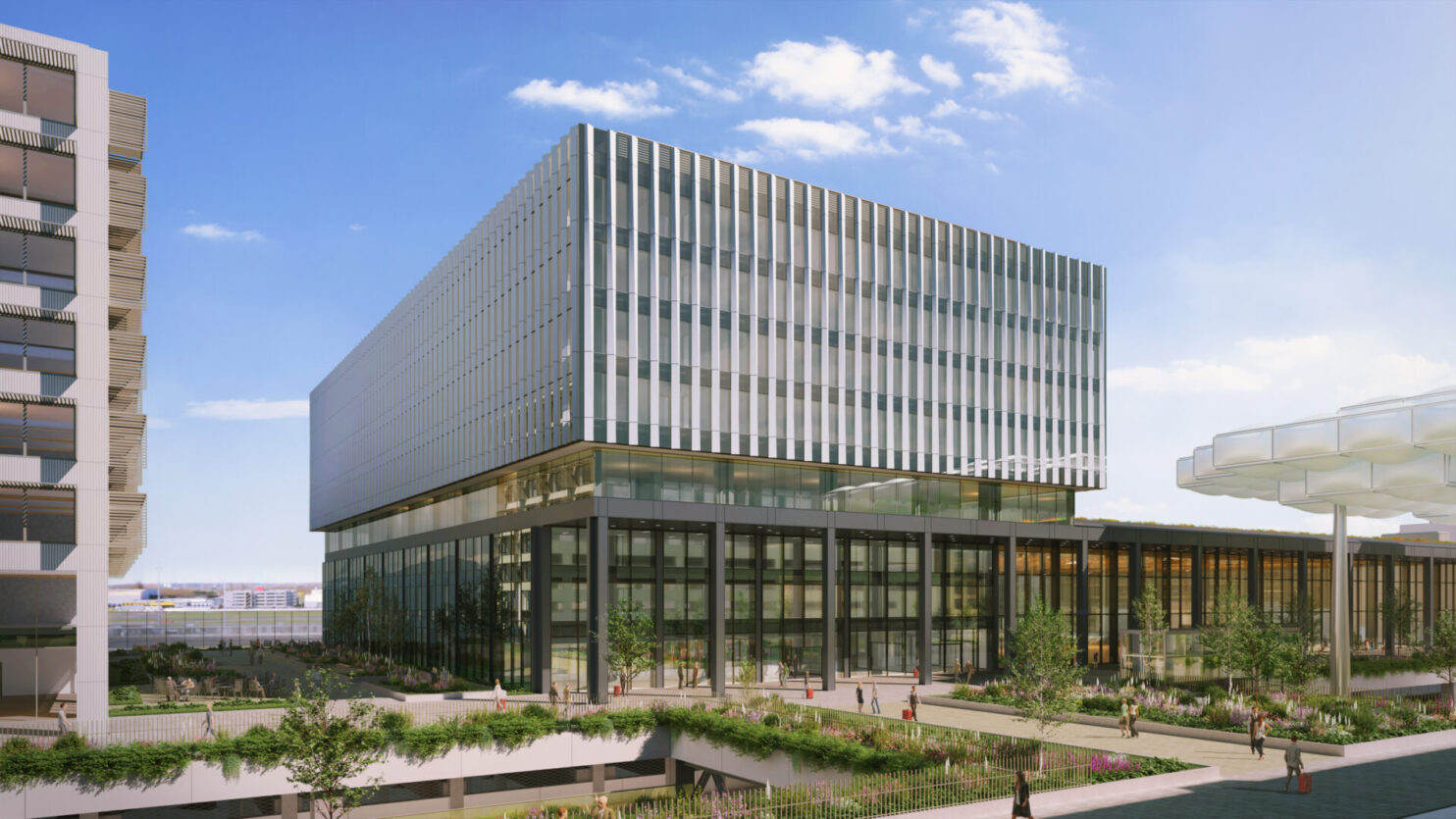
Next to the terminal, a new four-star hotel with over 300 rooms will be built, complementing the existing Sheraton hotel to offer a broader range of accommodation options. In addition to being a place to stay overnight, it will also serve as a pleasant place to meeting for dining, working, and relaxing.
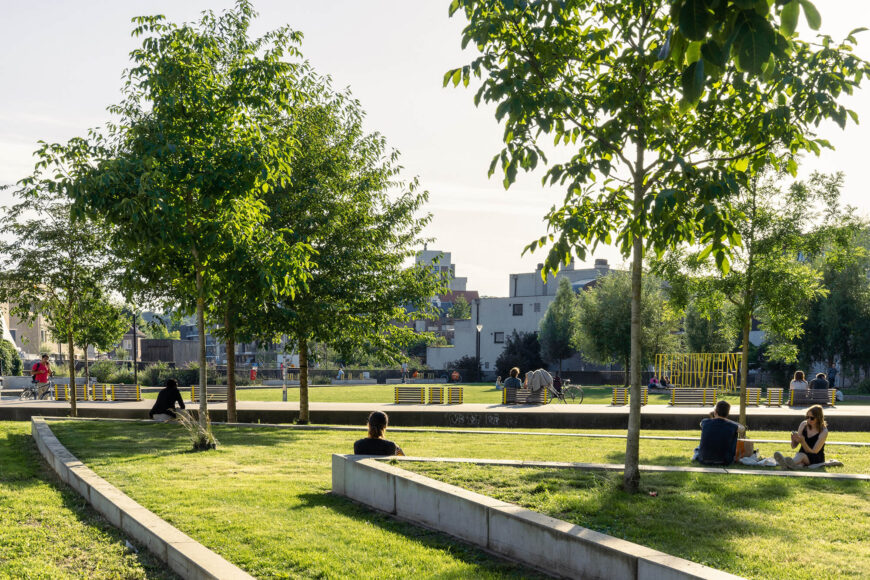
Nature brings peace and relaxation. Both inside the buildings and in the surrounding areas, the design places a strong emphasis on experiencing the greenery. The green boulevard and park will serve as the gateway to the intermodal hub.
The outdoor space will be extensively greened, primarily with native plant species. This greenery contributes to a sustainable, biodiverse living environment. Additionally, the green space provides water buffering and helps reduce the urban heat island effect. Inside the new buildings, the green design elements also create a pleasant and welcoming atmosphere.
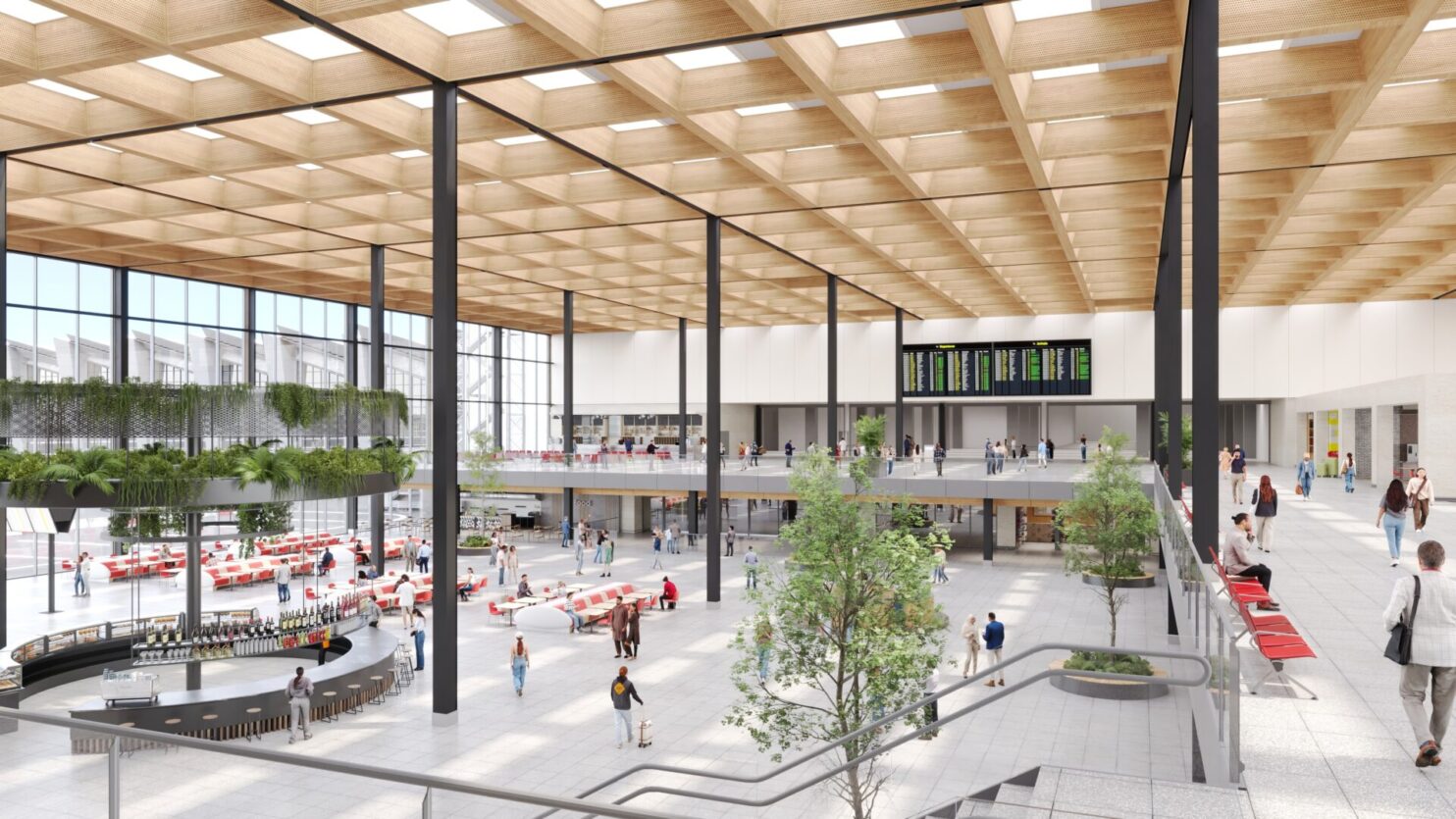
The new buildings aim to meet sustainability certifications such as BREEAM (Outstanding), WELL (Platinum), and DGNB (Gold), in line with Brussels Airport’s sustainability strategy. The design team is focusing on flexible buildings with modular layouts, wooden structures where possible, sustainable material choices, circular principles, reduced energy demand, and the integration of future-proof technologies such as water infiltration systems, thermal energy storage, heat pumps, and solar panels.
Construction on the intermodal hub, terminal, and hotel is set to begin no earlier than the second half of 2026. The buildings will be delivered in phases, with final completion expected by 2032.
With this ambitious project, Brussels Airport strengthens its role as a leading European hub, enhancing connectivity for Belgium while connecting passengers, businesses, and communities more than ever.